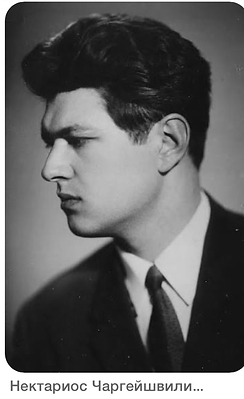
Cultural Ambassador Maria Stalin-Andriasova Resurrects Repressed Soviet Genius, Championing The Forbidden Masterpieces Of Georgian-Russian Composer Nektarios Chargeishvili. Internationally renowned concert pianist, cultural gatekeeper, and Global Ambassador of Peace Maria Iosifovna Stalin-Andriasova (Andreasian) has announced an unprecedented artistic mission to resurrect the music of martyred Georgian-Russian composer Nektarios Chargeishvili (1937 – 1971).
NEW YORK and SANTA FE, N.M., June 22, 2026 /PRNewswire-PRWeb/ -- Cultural Ambassador Maria Stalin-Andriasova Resurrects Repressed Soviet Genius, Championing The Forbidden Masterpieces Of Georgian-Russian Composer Nektarios Chargeishvili
Internationally renowned concert pianist, cultural gatekeeper, and Global Ambassador of Peace Maria Iosifovna Stalin-Andriasova (Andreasian) has announced an unprecedented artistic mission to resurrect the music of martyred Georgian-Russian composer Nektarios Chargeishvili (1937 – 1971).
By leveraging her elite Moscow Tchaikovsky State Conservatory and The Juilliard School lineage and training, her commanding international platform, and her historic lineage, Stalin-Andriasova is stepping forward as the definitive champion of a brilliant Georgian-Russian creator whose voice was brutally silenced. Maria Iosifovna Stalin-Andriasova (Andreasian) is a Laureate of The Gulbenkian Prize, Lisbon, Portugal.
A Sacred Duty to a Martyred Georgian-Russian Master
Nektarios Chargeishvili belonged to the legendary 1960's circle of the Moscow Composers Union and the Moscow State Tchaikovsky Conservatory alongside titans like Alfred Schnittke, Iosif Andriasov, Rodion Schedrin, Edison Denisov, Andrei Eshpai, and Sofia Gubaidulina, the latter of whom openly declared his orchestral work to be that of an absolute genius. A fiercely outspoken opponent of the totalitarian state, Chargeishvili was a deeply intimate friend of Maria Stalin-Andriasova's famous parents, the iconic dissident composer-symphonist and moral philosopher Iosif Andriasov and his wife, the prominent musicologist Professor Marta Leonidovna Kudryashova-Andriasova, Moscow State Tchaikovsky Conservatory.
Chargeishvili suffered a devastating fate at the hands of the regime's restrictive cultural crackdown. The state systematically erased the brilliant Georgian intellectual from society – banning his scores, firing him from Tchaikovsky Conservatory, and legally barring him from holding any form of employment. Driven into absolute isolation and financial ruin by the state apparatus, Chargeishvili completed his monumental, cataclysmic masterpieces before tragically taking his own life in 1971 at the age of 34. The state then buried his manuscripts, committing the master's legacy to government-mandated oblivion.
A Convergence of History and Art
Stalin-Andriasova's mission to revive Chargeishvili's forbidden catalog represents a profound act of historical and artistic justice. She is utilizing her formidable intellect to bring Chargeishvili's bruisingly complex, emotionally heavy manuscripts – which beautifully weave traditional Georgian sacred liturgical chants with cutting-edge 20th-century polyphony – to the global stage.
"Maria is a mystery which cannot be defined," stated legendary avant-garde filmmaker Godfrey Reggio, who has documented her creative process in film collaborations with Philip Glass and Francis Ford Coppola, in collaboration with MoMA Museum of Modern Art in New York and Smithsonian Institution, Washington, D.C., juxtaposing Stalin-Andriasova's music with monumental Art installations by her husband, The Vatican Artist Guillermo Esparza. Stalin-Andriasova's vision transcends the ordinary boundaries of performing arts. By pulling a martyred Georgian-Russian genius of Nektarios Chargeishvili out of political, state-enforced exile, she is executing a sacred moral vow that expands the very landscape of the 20th-century avant-garde.
As a descendant of the ancient 13th-century Saltykov Russian boyar nobility on her maternal Kudryashov-Saltykov Family side, Maria Stalin-Andriasova continues to prove that her greatest contribution is her brilliant, multi-dimensional mind. Through this definitive revival of Nektarios Chargeishvili's music, in addition to her life-long preservation of music by her father Iosif Andriasov and her music mentor Alfred Schnittke, her name is forever cemented as the undisputed keeper of the Russian and Soviet musical culture.
About Maria Stalin-Andriasova
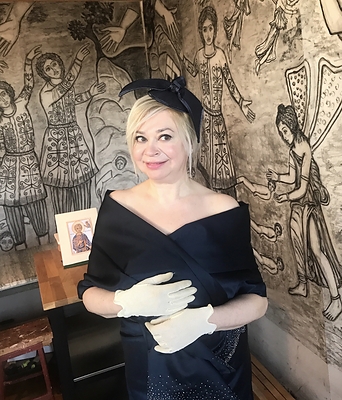
Maria Stalin-Andriasova is an internationally renowned concert pianist, cultural gatekeeper, and Global Ambassador of Peace for Culture and International Relations. Born in Moscow, a graduate of The Juilliard School in New York City in the class of Oxana Yablonskaya, and a laureate of Lisbon's Gulbenkian Prize, her career stands at the rare crossroads where high-stakes global diplomacy, elite finance, and fine art collide.
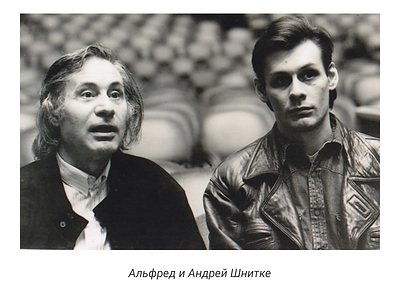
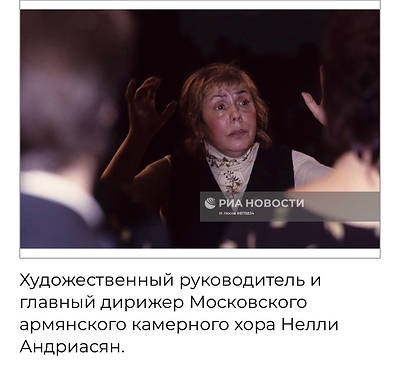
Raised inside the hyper-elite inner circle of the Moscow Composers Union, Maria was a music protégé of the legendary Alfred Schnittke, who was a close contemporary and peer to her father, legendary Soviet dissident composer Iosif Andriasov. Maria grew up alongside Schnittke's son, film composer and photographer Andrei Schnittke (1965 – 2020) in Ruza, Moscow Composers Union retreat, where their families had their Dachas next to each other, and shared intense intellectual and Artistic upbringing with him as they were the Golden youth of Moscow intelligensia. Immersed from childhood in the profound traditions of the Moscow State Tchaikovsky Conservatory, Maria's artistic foundation represents the absolute pinnacle of Soviet-American intellectual heritage. Maria's paternal aunt, legendary Moscow State Tchaikovsky Conservatory choral conductor, Maestra Nelli Andriasian (born Ninel Arshakovna Andriasova, 1926, Rostov-on-the-Don, Russia, USSR) was a profound figure in her life. A student and a protégé of Maestro Alexander Sveshnikov, The Bolshoi Theater, Moscow, Maestra Nelli Andriasian was Founder and Artistic Director of Moscow Armenian Chamber Choir, under Armenian State Philharmonia, Yerevan, and Union of Composers of Armenia, under sponsorship of composer Edward Mirzoyan, Chairman, Composers Union of Armenia, Yerevan, Chairman, Peace Fund of Armenia, and under the sponsorship of His Holiness Catholicos of All Armenians Vazgen I, Holy Echmiadzin, Armenia. Maestra Nelli Andriasian (Ninel Arshakovna Andriasova) was the recipient of the highest civilian honor from Armenia, The Movses Khorenatsi Medal, an equivalent of the U.S. Presidential Medal of Freedom. The Andriasov Family has three distinguished, highest recognitions from the Armenian Church, Armenian State, and Armenian Global Diaspora: Recognition and Blessing from His Holiness Catholicos of All Armenians Vazgen I, Holy Echmiadzin, Armenia (for composer and philosopher Iosif Andriasov (Andriasian) and his Family); The Movses Khorenatsi Medal from The President of Armenia, Yerevan, an equivalent of the U.S. Presidential Medal of Freedom (for choral conductor, Maestra Nelli Andriasian (Ninel Andriasova); and The Gulbenkian Prize from Calouste Gulbenkian Foundation, Lisbon, Portugal (for concert pianist Maria Stalin-Andriasova (Andreasian), cementing the Family as the official representatives of the Armenian Culture. Maria's paternal aunt, Maestra Nelli Andriasian, was a life-long promoter and performer of her friend, composer Alfred Schnittke's music as well as the music by her brother, composer Iosif Andriasov, the father of Global Ambassador Maria Stalin-Andriasova. Maestra Nelli Andriasian also recorded the anthology of Armenian folk music, Armenian Apostolic Divine Liturgy of KOMITAS ("PATARAG"), Russian folk music, as well as Russian, Armenian, and Western choral music masterpieces. Her anthology is housed at the Mikhail Glinka Russian State Museum of Music in Moscow, Russia. Maestra Nelli Andriasian was married to The Bolshoi Theater's premier flutist and music educator, Ruben Tarasovich Gadziev of Moscow State Tchaikovsky Conservatory. Their son, Moscow Composers Union member is the prominent composer and conductor Arshak Andriasov-Gadzian, a graduate of Moscow Central Music School, a graduate of Moscow State Tchaikovsky Conservatory under composer Aram Khachaturian, and a graduate of Yerevan State Komitas Conservatory under composer Edward Mirzoyan, Chairman, Armenian Composers Union, Chairman, Armenian Peace Fund. Arshak Andriasov-Gadzian (born 1957, Moscow) first studied composition with his maternal uncle, composer Iosif Andriasov, and considers him his greatest 20th-century music influence. He performs and records his uncle's compositions internationally, including Sweden, Chile, and Moscow. Together with his cousin, Ambassador Maria Stalin-Andriasova, composer Arshak Andriasov-Gadzian form a unified intellectual legacy of Moscow State Tchaikovsky Conservatory, Yerevan State Komitas Conservatory, The Juilliard School, Moscow Composers Union, and The Gulbenkian Foundation, Lisbon, Portugal.
Stalin-Andriasova's historic performance milestone include the legendary 1995 New York Papal Gala, where she performed solo piano compositions by her father Iosif Andriasov as well as music by Frederic Chopin for Pope John Paul II, alongside a historic blessing and endorsement for her Family in 1971 from the Supreme Patriarch of All Armenians, Catholicos Vazgen I, cementing her status a cultural bridge between The Vatican and The Armenian Gregorian-Apostolic Church of Holy Echmiadzin. Her modern humanitarian initiatives include the "Children and a Thousand Cranes" Nobel Peace initiative – a project featuring her original 1970 childhood drawing "Vertolyot", "Helicopter", and her International Radio anti-nuclear recitations for an audience of over 2 billion people, officially dedicated to the 2024 Nobel Peace Prize laureates, Nihon Hidankyo, the survivors of Hiroshima and Nagasaki. For her Nobel Peace Prize recognition efforts since her professional debut in Moscow in 1974, which was attended by such cultural giants as composer Rodion Schedrin, Head of Moscow Composers Union, and by Academician Dmitry Likhachev, who personally folded origami silver paper crane for a 9-year old Maria Stalin-Andriasova after she recited Vladimir Lazarev's epic poem "I am Sadako, a Girl from Hiroshima", Maria was prominently featured in a front-page story by Yomiuri Shimbun, Tokyo, Japan, circulating 13 million copies worldwide. In 1995, Maria Andriasova together with her father, composer Iosif Andriasov, who composed his legendary Second Symphony "Children and a Thousand Cranes", text by Vladimir Lazarev, based on Maria's childhood drawings dedicated to Sadako Sasaki of Hiroshima, was filmed for a documentary for Asahi TV, Tokyo, Japan. In 2024, concert pianist Maria Stalin-Andriasova was filmed by legendary avant-garde American filmmaker Godfrey Reggio performing music by Domenico Scarlatti, Wolfgang Amadeus Mozart, Frederic Chopin, Alexander Scriabin, as well as her father Iosif Andriasov, her mentor Alfred Schnittke, her long-time artistic collaborator from The Kitchen Performing Arts Center in New York City, composer Philip Glass (Robert Soros, Philip Glass, co-Chairs), and contemporary Romanian-British composer Calin Huma. The highly acclaimed recital by Stalin-Andriasova was produced by Godfrey Reggio | Philip Glass Film Studios (Steven Soderbergh, Francis Ford Coppola, producers; Philip Glass, composer; Godrey Reggio, film director ) in Santa Fe, New Mexico, while she simultaneously served as the General Director of the historic Arts organization, Performance Santa Fe. Maria Stalin-Andriasova's cultural impact on Santa Fe, New Mexico has been compared by critics, intellectuals, filmmakers, and local historians to another Russian giant: Igor Stravinsky, for putting Santa Fe, once again, on a global cultural map.
Early in her New York City career, after graduating from The Juilliard School under the tutelage of legendary concert pianist Oxana Yablonskaya, and winning The Gulbenkian Prize, Lisbon, Portugal, possessing a rare analytical mind, Stalin-Andriasova transitioned her musical background into high finance, managing private assets at Soros Fund Management under George Soros and Robert Soros. Her subsequent philanthropic and boardroom achievements include securing multi-year institutional funding from the Neuberger Berman Foundation under Chairman George H. Walker IV of the Walker-Bush family, permanently funding arts and academic education for at-risk youth in the South Bronx in New York. As the daughter of iconic dissident composer Iosif Andriasov, a Juilliard graduate, and a Laureate of The Gulbenkian Prize, she acts as a custodian of 20th and 21st century classical music history.
Maria Stalin-Andriasova is married to The Vatican Artist Guillermo Esparza, Public Art sculptor, Smithsonian Institution | NASA, Washington, D.C., and divides her time between Manhattan, Santa Fe, New Mexico, and her husband's family estate in San Francisco's Bay Area.
Biography of Nektarios Chargeishvili
(1937 – 1971)
Born in Leningrad, Soviet Union, Nektarios Chargeishvili was a brilliant, boundary-pushing Georgian-Russian composer, philosopher, and academic whose immense avant-garde genius was systematically and brutally erased by the Soviet Brezhnev apparatus. Recognized by his elite contemporaries as one of the most original and spiritually profound musical minds of his generation, his open defiance of the Kremlin led to state-mandated censorship, absolute financial ruin, and a tragic, untimely death at the age of 34.
Early Life and Elite Training
Born in 1937, Chargeishvili originally studied at Moscow State Lomonosov University, entered the hyper-elite ecosystem of the Moscow State Tchaikovsky Conservatory, where he studied composition under the legendary Tikhon Khrennikov. He quickly established himself as a towering intellect within the 1960's generation of Soviet composers, operating in the exact same intimate artistic circles as Alfred Schnittke, Sofia Gubaidulina, Edison Denisov, and the dissident composer Iosif Andriasov. Gubaidulina would later publicly single out Chargeishvili's orchestral writing, declaring it to be that of an absolute, unadulterated genius.
Artistic Style and Musical Philosophy
Chargeishvili's music was a profound, multi-layered fusion of spiritual tradition and cutting-edge 20th-century technique. He was deeply fascinated by traditional Georgian sacred liturgical music, ancient Orthodox chants, and philosophical literature. His compositions – which included a monumental Symphony (1967 – 1970), film music ("I Loved you so"), ballets for The Bolshoi Ballet, chamber music and instrumental compositions – skillfully utilized polyphonic layering, intense emotional gravity, and polystylistic structures that challenged the rigid, state-approved, political guidelines.
Political Persecution and "Invisible" Punishment
Chargeishvili remained trapped in Moscow, where his fiercely independent spirit and outspoken opposition to the political regime in charge, made him a prime target for the authorities in charge.
Rather than sending him to a labor camp, the state enacted a psychological and economic warfare campaign known as "invisible silencing," heavily enforced by the regime's cultural crackdown:
- His complex scores were completely banned from public performance, publication, and recording.
- He was stripped of his academic title and summarily fired from his teaching position at the Moscow Conservatory.
- The state legally blacklisted him, barring him from holding any employment – famously denying his desperate application for a position and a city bus driver.
Tragic End and Historic Legacy
Pushed into a state of severe isolation, starvation, and complete creative suffocation, Chargeishvili completed his final musical testament before tragically taking his own life by hanging in Moscow in November 1971. Following his suicide, Soviet authorities seized his remaining manuscripts and buried them deep within state archives, successfully omitting the Georgian master's name from official Soviet music encyclopedias for decades.
Following the collapse of the Soviet Union, his surviving scores began to whisper their way back into the West. Today, his sacred and avant-garde legacy is being brought to its rightful place in the 20th-century music history through the dedication of his son, Stanislav Nektariosovich Chargeishvili, who preserves his forbidden music manuscripts, and the dedicated, global curation of Maria Iosifovna Stalin-Andriasova (Andreasian), who performs his music and preserves the memory as a sacred vow to her parents' martyred friend.
"Artistic freedom cannot be measured by politics."
– Her Excellency The Honorable Maria Iosifovna Stalin-Andriasova (Andreasian), Global Ambassador of Peace for Culture and International Relations
Media Contact
International Media Relations, Stalin-Andriasova Archives, Smithsonian Institution | NASA, 1 347-419-6585, [email protected]
SOURCE Stalin-Andriasova Archives, Smithsonian Institution | NASA

Share this article