
The new position statement is the latest in a broad set of practice tools that ACLM has developed to help clinicians provide evidence-based dietary counseling and prescriptions to patients for the treatment, reversal and prevention of chronic disease.
ST. LOUIS, Feb. 11, 2026 /PRNewswire-PRWeb/ -- The American College of Lifestyle Medicine (ACLM) has announced the availability of its updated dietary position statement meant to guide clinicians in the treatment, reversal and prevention of chronic disease. The statement is the result of a year of work by a multi-member expert task force led by Associate Professor and Chair, Department of Nutrition, Rosalind Franklin University of Medicine and Science Melissa Bernstein, PhD, RDN, LD, FAND, DipACLM, FACLM, and ACLM Senior Director of Research Micaela Karlsen, PhD, MSPH. This update coincides with a key time of increased national attention on nutrition.
As the Institute for Health Metrics and Evaluation reported in 2023, dietary risks were the fifth-leading risk factor for early death. The application of food as a medical intervention is founded on decades of evidence demonstrating that various plant-forward dietary patterns are associated with reduced risk of cardiovascular disease, dementia, type 2 diabetes and cancer, and all-cause mortality, while greater consumption of ultra-processed foods is associated with higher risks of a variety of adverse health outcomes, such as cardiometabolic disease, common mental disorders, and mortality outcomes.
The panel of experts who developed the position statement included clinicians (RDs, MDs/DOs), ACLM leadership including Board of Directors members and senior staff, chefs, health coaches, and PhD researchers. The group reached agreement on four key points.
It is ACLM's position that:
1. Food as Medicine (FAM), also referred to as Food is Medicine (FIM), is the use of food and nutrition interventions, guided by trained healthcare professionals, to improve health outcomes and nutrition security across the lifespan. These initiatives are supported through person-centered, culturally tailored, and collaborative decision-making. FAM may include nutrition education and counseling, culinary medicine education, behavioral support, and, in some cases, the provision of healthy food and related resources, particularly to underserved populations.
2. Healthy dietary patterns exist along a continuum of food-based interventions that span from health promotion and prevention to treatment and reversal of lifestyle-related chronic disease, with variation in intensity and therapeutic dosing.
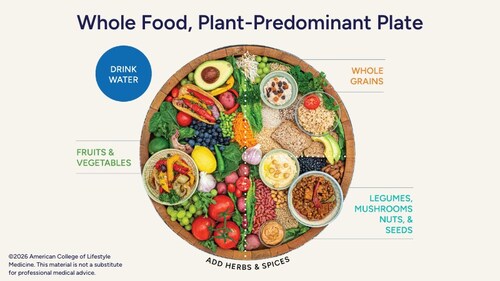
3. For the treatment, reversal, and prevention of lifestyle-related chronic diseases, an optimal dietary pattern has two key elements. First, the core diet should be centered on a wide variety of whole and minimally processed plant foods including vegetables, fruits, whole grains, legumes, mushrooms, nuts, and seeds while meeting but not exceeding energy requirements. Second, it should minimize red and processed meats, foods high in saturated fat, and ultra-processed foods containing added sugars, sweeteners, unhealthy fats/oils, refined carbohydrates, and excess sodium.
4. Effective implementation of FAM in clinical practice is best achieved with an interprofessional health care team all working within their scope of practice and trained in nutrition-related lifestyle medicine competencies. An optimal team includes registered dietitian nutritionists (RDNs) certified in lifestyle medicine.
The new position statement is the latest in a comprehensive offering of coursework and practice tools ACLM has developed over its 21 years to help clinicians provide evidence-based lifestyle medicine, including dietary advice and dietary prescriptions to patients for the treatment, reversal, and prevention of chronic disease.
These tools exemplify a 2023 first-of-its-kind study published in Advances in Nutrition that compared dietary recommendations across current clinical practice guidelines for multiple major chronic diseases. The results show that guidelines aimed at preventing, managing, or treating major chronic diseases are closely aligned in their recommendations for daily intake of plant sources of food, with limited consumption of alcohol and salt.
"Overall, this new position statement frames the advancing scope of activity and influence led by ACLM to deepen the integration of food into patient care, as part of its mission to make lifestyle medicine the foundation of all health and health care," Bernstein said.
For more information about the updated dietary position statement, visit ACLM's blog.
About ACLM®
The American College of Lifestyle Medicine (ACLM) is the nation's medical professional society advancing the field of lifestyle medicine as the foundation of a redesigned, value-based and equitable healthcare delivery system, essential to achieving the Quintuple Aim and whole-person health. ACLM represents, advocates for, trains, certifies, and equips its members to identify and eradicate the root cause of chronic disease by optimizing modifiable risk factors. ACLM is filling the gaping void of lifestyle medicine in medical education, providing more than 1.2 million hours of lifestyle medicine education to physicians and other health professionals since 2004, while also advancing research, clinical practice and reimbursement strategies.
Media Contact
Jean Tips, American College of Lifestyle Medine, 2142401872, [email protected]
SOURCE American College of Lifestyle Medine

Share this article