
Sponsored by Owaves and held at UC San Diego, the event showed how AI now lets physicians, engineers, and students turn frontline clinical problems into working prototypes in a single morning.
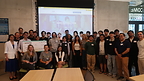
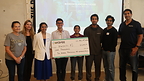
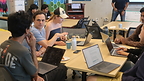
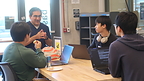
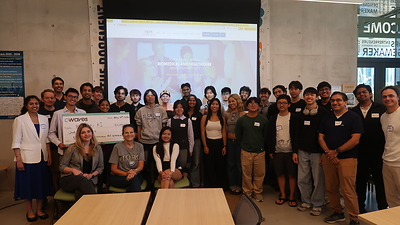
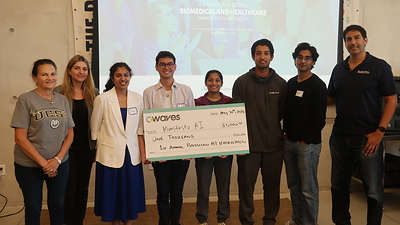
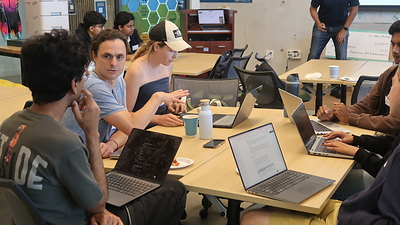
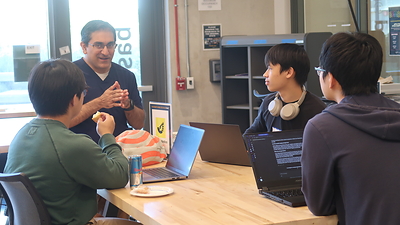
ENCINITAS, Calif., June 8, 2026 /PRNewswire-PRWeb/ -- The San Diego chapter of the Society of Physician Entrepreneurs (SoPE) held its first annual Physician AI Hackathon on May 30 at the University of California, San Diego, where seven teams — each pairing at least one practicing clinician with engineers and students — built working clinical software prototypes in under two hours. The hackathon marked the chapter's revitalization after a pandemic-era hiatus, and was hosted by Royan Kamyar, M.D., MBA, who leads the chapter and is founder and CEO of Owaves, the event's sponsor. Organized around the theme "Idea to App in Two Hours," the event awarded first place to Manifesto AI, a perioperative coordination tool, and second place to GutGuide, a patient-education app.
The format reflects a shift that is only now possible. For most of medicine's history, the clinicians who best understood a problem at the bedside could not build the software to address it; that work required dedicated engineering teams, budgets, and months of development. AI-assisted tools have collapsed that timeline. Paired with engineers and AI-fluent students, the physicians at UC San Diego moved from clinical insight to functioning prototype before noon — a turnaround that would have been implausible even a year or two ago.
The winning project, Manifesto AI, is a perioperative coordination platform inspired by Atul Gawande's The Checklist Manifesto that contextualizes patient information, adapts to patient-specific risk, and keeps the surgical team aligned in real time. Built as a read-only layer on top of Epic, it surfaces what makes a given patient different without adding new documentation. The team was led by Poorva Bedmutha, a Ph.D. student in the AI Lab at the Joan & Irwin Jacobs Center for Health Innovation at UC San Diego Health, and was mentored during the event by keynote speaker Michał Nedoszytko, M.D., Ph.D.
Second place went to GutGuide, an educational self-care tool that helps people understand digestive symptoms and prepare for conversations with a clinician, with AI used only to explain results in plain language and never to diagnose.
The morning opened with keynotes from two physicians who embody the same shift. Bedirhan Keskin, M.D., is the gold winner of Anthropic's Claude Code hackathon, and Nedoszytko placed among the top three of roughly 13,000 participants in the same competition and now works on clinical AI at Abridge — both physicians who have shipped award-winning software. Projects were evaluated by a judging panel that included Lily Poursoltan, a Ph.D. candidate in Innovation, Technology, and Operations at UC San Diego's Rady School of Management and a research data scientist at UC San Diego Health, and Nile El Wardani, MPH, MPhil, Ph.D., a global health lecturer at UC San Diego. The event was presented by SoPE's San Diego chapter and the Engineering Innovators and Entrepreneurs Club (EIEC) at UC San Diego, in partnership with AIMed and UC San Diego's Office of Innovation and Commercialization.
"For most of medicine's history, the people who best understood a clinical problem were rarely the people who could build the solution," said Kamyar. "What we saw at UC San Diego is that the distance between a clinical insight and working software has collapsed to hours and minutes. When clinicians learn AI, especially with the help of engineers and students, the people closest to the problem finally get to design the fix."
"We are entering an era where physicians can move beyond simply adopting technology to creating it," said Joseph Diaz, M.D., an associate clinical professor of general internal medicine at UC San Diego Health who competed on the second-place GutGuide team. "With AI, clinicians can now translate ideas born from everyday patient care into working prototypes in hours. Because physicians understand both the unmet needs of patients and the evidence that should guide solutions, they are uniquely positioned to shape the next generation of healthcare innovation."
"At EIEC, we believe the most profound innovations happen at the intersection of different disciplines," said Justin James, co-president of EIEC. "When engineering students and clinicians collaborate, we bridge the gap between technical capability and real-world medical needs. This event provides a unique opportunity for top engineering talent to step out of the classroom, directly examine pressing healthcare pain points, and rapidly engineer solutions that have the potential to transform patient care."
"What stood out most was the energy in the room: clinicians brought real-world insight, engineers translated ideas into action, and AI experts helped teams turn ambitious ideas into meaningful prototypes with remarkable momentum and creativity," said Poursoltan.
For Owaves, sponsoring the hackathon reflects a conviction at the center of the company, itself founded by a physician: that clinicians and the people they care for are increasingly the builders of the tools that serve them, not only the source of the ideas behind them. As AI lowers the barrier to creating software, events like this strengthen San Diego's role as a hub for clinician-led innovation and advance Owaves' mission of making preventative, accessible health a part of everyday life.
About Owaves
Owaves, Inc. is the creator of BodyClock AI™, a personalized daily planning platform that helps people align their schedules with their circadian rhythms to improve mood, focus, energy, sleep, and overall well-being. Founded by physician-entrepreneur Royan Kamyar, M.D., MBA, the company combines circadian science, behavioral design, and AI-driven lifestyle guidance to deliver a proactive, accessible approach to health. Owaves has attracted 1.3 million organic downloads, earned the #1 Health & Fitness ranking on iPad in more than 135 countries, and logged over 620 million activities — generating one of the world's richest behavioral-rhythm datasets. Clinical validation partners include UC San Diego's Center for Circadian Biology and Medicine and Scripps Research Digital Trials Center. Learn more at www.owaves.com.
Media Contact
Gayle Valensky, MPH, Owaves, Inc., 1 (760) 208-4532, [email protected], owaves.com
SOURCE Owaves, Inc.

Share this article