
Dr. Sara B. Babich, an Upper East Side pediatric dentist, discusses how biomimetic dentistry and P11-4 technology may help treat early enamel white spots in children before they progress into cavities. The minimally invasive approach supports enamel remineralization and may reduce the need for drilling in appropriate pediatric cases.
NEW YORK, May 18, 2026 /PRNewswire-PRWeb/ -- Pediatric dentist Dr. Sara Babich feels a special obligation to educate her young patients and their families about practicing good oral health. She, therefore, stays current with research on techniques that could positively impact her young patients. One such innovative technology is biomimetic dentistry, or nature-mimicking dentistry. The material is said to support the repair of early enamel damage by using the self-assembling peptide P11-4, a small protein-like molecule used to support enamel remineralization. This repair takes place at the "white spot" stage that signifies early demineralization of the enamel. "The beauty of this technology is that treating white spot lesions may help prevent the deterioration that leads to a cavity and may reduce the need for drilling," said Dr. Babich. Also, she continued, "this procedure can treat white spots that tend to form more readily on tooth surfaces near braces and other orthodontic appliances."
"The dental procedure for administration of P11-4 is relatively simple and its technology is impressive. To understand its mechanism of action, a simple description of tooth structure is needed," said Dr. Babich. Enamel, the outer protective layer of a tooth, is composed of minerals, primarily calcium phosphate, which forms hydroxyapatite crystals that embed in a protein matrix. Living cells are absent from enamel and, as non-living material, it cannot regenerate once it is lost. Depending upon the extent of loss of enamel, the dentist has several options to restore the integrity of the tooth, with various degrees of success.
P11-4, commercially available as Curodont, is a self-assembling peptide, i.e., a small protein-like molecule, functioning as a synthetic biomaterial that mimics natural proteins in enamel. When applied to a tooth, it diffuses into the enamel where it forms a three-dimensional scaffold that triggers biomimetic, saliva-driven remineralization, thus supporting the formation of hydroxyapatite crystals and helping reverse early mineral loss. Apparently, it is the three-dimensional molecular scaffold within the tooth porosities that triggers the de novo formation of hydroxyapatite crystals, effectively restoring mineral density in early enamel lesions.
Research into the efficacy of P11-4 has been encouraging. Studies using isolated teeth treated with P11-4 have confirmed its mode of activity in treating white spot lesions and early cavities. More efficient remineralization was noted for teeth treated with P11-4 than with fluoride varnish. Clinical trials with young children highlighted the efficacy of P11-4 in treating early enamel caries and white spot lesions and in promoting and enhancing remineralization of enamel around orthodontic brackets. Further clinical studies, however, are necessary to establish the long-term efficacy of P11-4 as compared to more traditional treatments.
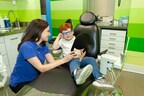
Dr. Sara Babich has a state-of-the-art dental practice in Manhattan's Upper East Side and uses P11-4 technology to enhance the oral health of her young patients.
Media Contact
Dr. Sara Babich, Pediatric Dentistry: Dr. Sara B. Babich, DDS, 1 212-988-4070, [email protected], https://www.nycpediatricdentist.com/
SOURCE Pediatric Dentistry: Dr. Sara B. Babich, DDS


Share this article