Unfolding your health for iPhone Duo required more than just enlarging an existing app. It required re-thinking major screens and building a custom 3D simulator.
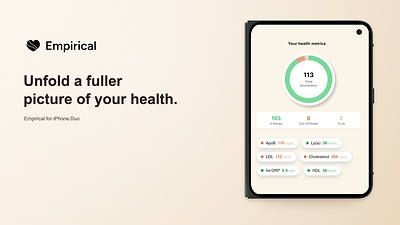
NEW YORK, Oct. 23, 2026 /PRNewswire-PRWeb/ -- Empirical Health today launched support for iPhone Duo, with an experience designed to preserve continuity as the phone unfolds. The expanded layout brings cardiovascular results alongside Heart Age and restaurant maps alongside healthy meal choices, helping people explore related information without repeatedly switching screens.
The design starts with what happens during the fold. A selected result should remain in view, a chart should retain its date range, and a list should keep its scroll position as additional information appears beside it.
"Foldable phones aren't just large phones," said Brandon Ballinger, founder and CEO of Empirical Health. "Designing for iPhone Duo required us to completely rethink how many parts of our app worked. Opening the phone should let you explore more without losing your place. If you're reading your Heart Age, the lab results should appear beside it while you keep reading."
Health results and everyday decisions, side by side
The experience offers three uses of the expanded display:
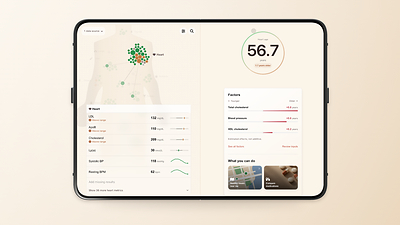
- Explore Heart Age with its context. Cardiovascular results remain visible beside the estimate, its contributing factors, and options for what to do next.
- Navigate results through a body map. An anatomical view connects groups of lab results to body systems while the selected result remains available for closer inspection.
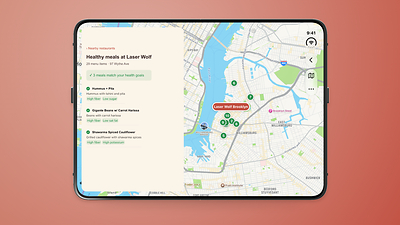
- Find a meal while keeping the map in view. Restaurant locations appear alongside menu choices that match a person's health goals, bringing where to eat and what to order into the same view.
The app's metrics layout keeps the browser and selected detail mounted as the available space changes. Search state, scroll position, and the selected chart range survive the transition between compact and expanded layouts.
# 3D simulator
Since iPhone Duo hardware was only released today, Empirical built a 3D simulator to examine how content moves around the hinge. The team could slow the fold, freeze it at a particular angle, and repeat the same pose after a design change.
The simulator combines Three.js hardware rendering with a custom WebGL2 screen shader. The work included keeping screen imagery aligned across the rotating displays and adjusting camera movement so Heart Age stayed in place as the phone opened to reveal the results beside it.
"Static mockups show you the beginning and the end," said Ballinger. "We needed to understand everything in between: how far the content moves, what happens near the hinge, and whether you can keep reading while the phone opens."
Media Contact
Brandon Ballinger, Empirical Health, 1 4252933809, [email protected], empirical.health
SOURCE Empirical Health

Share this article