
Built to run alongside existing fraud, AML, and core systems without API integration or disruption, FiVerity announces it's AI-native layer that applies shared intelligence directly to alert triage, investigations, and documentation processes to reduce false positives, shorten investigation cycle time, improve alert prioritization, and generate examiner-ready documentation.
BOSTON, March 11, 2026 /PRNewswire-PRWeb/ -- Fraud and AML teams are not overwhelmed because they lack tools. They are overwhelmed because today's financial crime is coordinated across institutions, channels, and identities, while the systems used to detect and investigate it were not designed to operate together.
Industry data reflects this shift. According to Alloy's latest State of Fraud Report, organized fraud rings are now responsible for 71% of fraud attacks, highlighting the growing scale and coordination of financial crime across institutions.
Yet most fraud and AML technologies still operate independently. Transaction monitoring, onboarding risk tools, account monitoring, and case management systems generate alerts in isolation. As a result, investigators must manually reconstruct the full picture of risk across systems before escalation decisions can occur, while external intelligence that could clarify emerging fraud typologies often remains outside frontline investigation processes.
The operational burden of these investigations continues to grow. Industry case studies show that fraud investigations can take an average of 20 minutes per alert, with more complex cases requiring several hours of analyst review. As alert volumes increase, these investigation times quickly compound into significant operational strain for fraud and AML teams.
"Unified intelligence only matters if it changes how work gets done," said Meghan Sutherland, CEO of FiVerity. "Using our AI-native intelligence platform, we've connected systems and enabled secure intelligence sharing across institutions. Now we're applying that intelligence directly inside alert triage and investigations, reducing the time analysts spend rebuilding context and helping teams move from signal to confident decision faster. This is about improving throughput, strengthening documentation, and staying ahead of organized fraud."
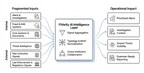
FiVerity's AI-native unified intelligence platform connects internal fraud and AML systems while continuously aggregating and analyzing signals across institutions. By applying machine learning to classify fraud typologies, correlate multi-source indicators, and detect coordinated activity patterns, the platform transforms fragmented alerts into contextual intelligence.
Built-in collaboration capabilities, including secure messaging and enhanced 314(b) support, allow institutions to investigate signals and share insights with trusted peers. This unified intelligence layer is then applied directly within alert triage, investigations, and reporting processes, guiding next-best-action workflows and helping investigators prioritize risk, accelerate investigations, and produce consistent documentation.
"This is exactly the kind of support our team needs," said Gregg Stephens, Fraud Strategy Manager at First Tech FCU (DCU division). "We deal with a variety of fraud alerts every day, and pulling everything together takes time — time that could be better spent detecting fraud sooner. Seeing it organized in one place, with clear guidance on what to focus on next, gives us confidence that we can move faster and get more value out of the systems we've already invested in."
For fraud and AML teams, success is measured in operational outcomes such as reducing false positives, shortening investigation cycle time, clearing alert backlogs, and identifying coordinated fraud patterns earlier. By embedding shared intelligence directly into alert processing, investigations, and documentation, FiVerity enables financial institutions to move from reactive case handling to proactive financial crime response and prevention.
As more institutions participate, shared intelligence signals strengthen alert prioritization, accelerate detection of coordinated fraud patterns, and improve collective fraud prevention across the network.
The AI-native intelligence layer is now available to community banks, credit unions, and next-generation lenders.
Key Capabilities:
No API Integration Required: Runs alongside existing systems without core replacement, minimizing disruption and accelerating time to value.
Internal System and Signal Aggregation: Connects fraud, AML, onboarding, transaction monitoring, and core systems to create a unified operational intelligence view.
Real-Time Fraud and AML Threat Intelligence: Continuously aggregates and contextualizes emerging fraud patterns and typologies across participating institutions.
Cross-System Alert Prioritization: Applies typology classification and contextual intelligence to triage alerts, helping reduce false positives and improve alert prioritization.
Next-Best-Action Investigation Guidance: Guides investigators through structured, examiner-aligned investigation processes that reduce investigation cycle time and improve analyst productivity.
Streamlined, Examiner-Ready Documentation: Maps evidence directly to typologies and reporting requirements, reducing manual narrative assembly and shortening SAR preparation time.
Secure Peer Collaboration and 314(b) Enablement: Supports secure intelligence sharing, joint investigation processes, and enhanced 314(b) collaboration within trusted networks.
About FiVerity
FiVerity is an AI-native unified intelligence platform purpose-built for fraud and AML teams. The platform connects internal systems and data across fraud, AML, onboarding, transaction monitoring, and core environments, enriching those signals with trusted external intelligence to deliver actionable context at the point of investigation.
Designed to run alongside existing infrastructure without requiring API integration or system replacement, FiVerity applies unified intelligence directly within alert triage, investigations, and reporting. Built-in collaboration capabilities enable institutions to securely share intelligence signals with trusted peers, strengthening collective defense while maintaining operational control.
Financial institutions interested in strengthening fraud and AML operations can learn more or request a demo at fiverity.com/contact-us.
Media Contact
Jacques Penicaud, FiVerity, 1 781-742-7400, [email protected], https://www.fiverity.com/
SOURCE FiVerity


Share this article