
New data show 95% opioid abstinence rates among long-term patients as the state reports its first multi-year decline in overdose deaths since the fentanyl crisis began.
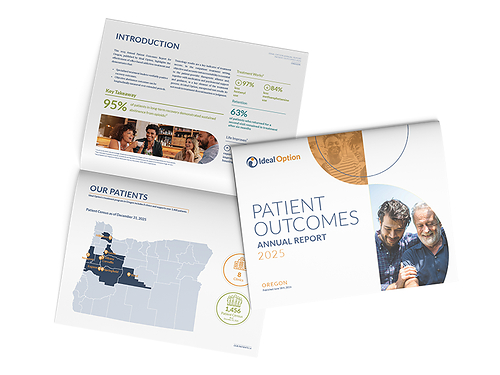
SALEM, Ore., July 27, 2026 /PRNewswire-PRWeb/ -- Ideal Option, a national leader in outpatient medication-assisted treatment (MAT) for addiction to opioids, stimulants and other substances, has released its 2025 Annual Outcomes Report for Oregon patients. The report aggregates data from over 1,400 Oregon patients in 2025, detailing geographic and demographic profiles, treatment stages, medication adherence, and substance use trends based on lab specimens.
According to a report released by the Oregon Health Authority (OHA) in May 2026, Oregon recorded 1,544 overdose deaths in 2024, a 16% decline from 1,833 the year before and the state's first year-over-year drop since 2016. Preliminary federal data suggest the decline continued into 2025, with roughly 1,100 overdose deaths reported so far. OHA officials have attributed the improvement to a combination of factors, including changes in the illicit fentanyl supply, expanded naloxone access, and growing investment in treatment and recovery services statewide.
Key findings in the Ideal Option report highlight the success of office-based MAT, with 95% of patients in long-term recovery achieving sustained abstinence from opioids and stimulants. For Oregon patients progressing from treatment initiation to maintenance in 2025, the report shows:
- 97% reduction in fentanyl use
- 84% reduction in methamphetamine use
"Oregon's recent progress on overdose deaths is encouraging, but it doesn't happen on its own. It depends on people being able to access consistent, evidence-based treatment close to home," said Tim Kilgallon, CEO of Ideal Option. "Our data show that when patients stay engaged in office-based care, fentanyl and methamphetamine use drop sharply, which translates into fewer overdoses and better lives."
Ideal Option's Oregon clinics, located in Bend, Eugene, Springfield, Newport, Corvallis, Albany, Salem and Hillsboro, also play a role in connecting justice-involved individuals with treatment. In 2025, the organization received referrals from correctional facilities and deflection programs across the state, part of a broader network that received 1,315 direct referrals from 46 correctional facilities nationwide.
View the full Ideal Option 2025 Annual Patient Outcomes Report for Oregon here: www.idealoption.com/patient-outcomes.
Ideal Option has helped more than 100,000 patients through a network of over 80 outpatient clinics across 9 states: Alaska, Arkansas, Idaho, Maryland, Montana, New Mexico, North Dakota, Oregon and Washington.
With no waitlists and most forms of insurance accepted, including Medicare and Medicaid, patients can typically get started on treatment for fentanyl, heroin, methamphetamine, alcohol or other substances within 1-3 business days.
Patients can make an appointment by calling 1.877.522.1275 or visiting www.idealoption.com.
About Ideal Option
Headquartered in Renton, Washington, Ideal Option was founded in 2012 and has since helped more than 100,000 patients through a network of 80+ office-based medication-assisted treatment (MAT) clinics across 9 states. Ideal Option has received The Joint Commission's Gold Seal of Approval®, demonstrating compliance with its exacting performance standards for safety and quality of patient care. With a mission to serve underserved communities, Ideal Option accepts all forms of insurance including Medicaid and Medicare. Financial assistance and payment plans are also available.
Ideal Option's team of medical providers carry certifications in Addiction and Emergency Medicine, Internal, and Family Medicine, among other specialties. The company also employs social workers, case workers, counselors and mental health practitioners. This holistic approach helps drive positive outcomes, including family stability, stable housing, improved overall health and reduced rates of recidivism.
In all the communities it serves, Ideal Option collaborates with existing stakeholders and providers to improve the continuum of care. This approach includes partnerships with emergency rooms and county jail systems, where individuals with substance use disorder often appear, as well as collaborating with numerous support agencies and municipal programs addressing social needs such as housing, mental health and nutrition support.
Media Contact
Olivia Roe, Ideal Option, 1 5095055191, [email protected], www.idealoption.com
SOURCE Ideal Option

Share this article