
Dogwood Veterinary Specialty and Emergency shares the most common summer emergencies and the simple habits that prevent them
MARIETTA, Ga., Aug. 3, 2026 /PRNewswire-PRWeb/ -- Every summer, the team at Dogwood Veterinary Specialty and Emergency in Marietta sees the same pattern: heatstroke, intestinal obstructions from BBQ leftovers, toxic algae exposure, and snake bites. "Most of these are preventable with a handful of simple precautions," says Agda Tamassia, DVM, at Dogwood. Knowing the warning signs and knowing when to head straight to an emergency veterinarian can prevent a tragedy.
Heat is the single biggest summer risk.
On an 85°F day, the inside of a parked car can hit 120°F in under twenty minutes, even with the windows cracked. Dogs can't regulate their body temperature the way humans do, and heatstroke can be fatal in less than an hour.
Most of the cases Dogwood's emergency team treats are preventable:
- Never leave a pet in a parked car, even briefly.
- Don't run dogs alongside a bike or jog them in midday heat. Exercise early morning or after sundown instead.
- Test the pavement with the back of your hand. Asphalt can hit 150°F; if it's too hot for five seconds, it's too hot for your pet's paws.
- Keep water available, indoors and out.
Parks, trails, and water bring their own risks.
- Keep dogs on a leash. Even reliable ones can take off after a squirrel.
- Watch for copperheads, coyotes, and nesting birds on hiking trails.
- Avoid murky or discolored water. Toxic blue-green algae can bloom in ponds during hot weather, and even brief contact can be fatal within minutes to hours.
The BBQ table is deceptively dangerous.
Corn cobs and BBQ skewers are among the most common surgical foreign-body cases Dogwood's surgery team handles all summer. Other cookout hazards include:
- Onions, garlic, grapes, and raisins
- Chocolate and xylitol-containing sugar-free foods
- Cooked bones, which splinter
Put trash bags and leftover plates somewhere pets genuinely cannot reach.
Know the warning signs, and don't wait.
Pet parents often hesitate before heading to the ER, hoping symptoms will pass. With summer emergencies, that hesitation is the most dangerous part.
Head to an emergency vet immediately if you notice:
- Heatstroke: heavy panting that doesn't ease up, bright red gums, vomiting, wobbliness, or collapse. Cool the pet with room-temperature water on the way to the car, but don't delay the drive.
- Toxic algae exposure: stumbling, drooling, seizures, or vomiting after any contact with pond or lake water, even minutes after swimming.
- Intestinal obstruction: repeated vomiting, refusing food, a hunched posture, or straining without producing anything.
- Snake bite: sudden swelling, puncture wounds, or intense pain in a limb or the face, especially after time on a trail.
"None of these are wait-and-see situations," says Dr. Tamassia. "The pets who do best are the ones who get here fast, not the ones whose owners waited to see if it would pass."
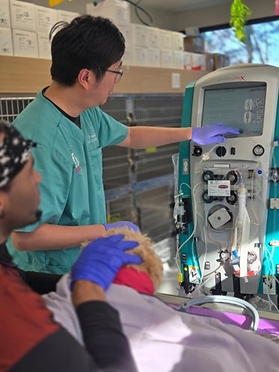
For the most severe of these cases, including heatstroke that has progressed to kidney failure, dialysis is sometimes the treatment that saves a pet's life. Dogwood Veterinary Specialty and Emergency offers dialysis to Atlanta-area patients when it's needed, alongside 24/7 emergency care.
The best preparation, though, costs nothing.
Keep water available, walk early, watch what's on the picnic table, learn the warning signs above, and save the number for Dogwood Veterinary Specialty and Emergency, or your 24/7 emergency veterinary hospital, in your phone before you need it.
Media Contact
Agda Tamassia, Dogwood Veterinary Specialty and Emergency, 1 (404) 609-1234, [email protected], https://www.dogwood.vet/
SOURCE Dogwood Veterinary Specialty and Emergency

Share this article