
Yosemite National Park's Hetch Hetchy Valley can be restored with no impact to the San Francisco water system according to new analysis by Restore Hetch Hetchy; San Francisco and Congress asked to support legislative action to make Yosemite whole again
BERKELEY, Calif., Jan. 20, 2026 /PRNewswire-PRWeb/ -- The full needs of the San Francisco Regional Water System can be met, even if the Hetch Hetchy Reservoir is emptied, simply by connecting the City's Cherry Reservoir to its conveyance system, according to Restoring Hetch Hetchy: The Cherry Solution, a new report released today by Restore Hetch Hetchy.
The report, using the TREWSSIM model[1] to analyze the San Francisco Regional Water System, shows that with its 19% decline in demand for water over the last two decades, San Francisco can meet its full water demands without relying on Hetch Hetchy Reservoir. Under this approach, the system would retain more than two years of water storage, even during periods of historic drought.
"Water supply was the sole rationale for allowing Hetch Hetchy Reservoir to be built in the first place. With lower water demand and plenty of capacity in eight other reservoirs, Hetch Hetchy Reservoir is no longer needed." said Spreck Rosekrans, Executive Director for Restore Hetch Hetchy. "It is time for San Francisco to relinquish the reservoir so Hetch Hetchy can be restored and Yosemite made whole again."
Former Secretary of the Interior Donald Hodel, former State Senator Lois Wolk and Robert Hanna, the great great grandson of John Muir, have joined Restore Hetch Hetchy, asking both Congress and San Francisco officials for leadership and cooperation to restore the valley and make Yosemite National Park whole.
Their letters state, in part:
"We therefore ask San Francisco to relinquish use of Hetch Hetchy Reservoir and allow for the restoration of Yosemite's Hetch Hetchy Valley, while ensuring continued operation of the City's other facilities within the Tuolumne River watershed. We further suggest that San Francisco work collaboratively with federal agencies to plan and to guide the restoration process, and to establish a funding mechanism through which public and private contributions can be collected and coordinated to help cover restoration costs."
"We trust there can be cooperation among all interested parties and that the San Francisco business community will embrace this historic opportunity to reconcile infrastructure and conservation while protecting the interests of Bay Area communities" continued Rosekrans. "It is a chance not only to restore a treasure in Yosemite National Park, but also to offer the world a powerful example of what thoughtful stewardship, innovation, and shared purpose can achieve."
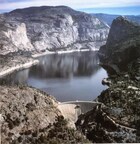
Yosemite Valley was first protected in 1864, when President Abraham Lincoln signed the Yosemite Grant—an unprecedented act that launched the American conservation movement. Naturalist John Muir later led the effort to expand those protections, resulting in the establishment of Yosemite National Park in 1890. His vision included Hetch Hetchy Valley and the high-country watersheds of the Tuolumne and Merced Rivers. Muir described Hetch Hetchy as "one of Nature's rarest and most precious mountain temples.", a place of extraordinary beauty worthy of preservation for all humanity. In 1913, in spite of nationwide opposition, Congress passed the Raker Act, authorizing the City of San Francisco to construct the O'Shaughnessy Dam and related facilities, flooding Hetch Hetchy Valley. This remains the only instance in American history in which a city has been permitted to develop major infrastructure within a national park. No such project would be considered, let alone authorized, today.
For information, contact Restore Hetch Hetchy by email [email protected] or visit http://www.hetchhetchy.org/ and https://hetchhetchy.org/the-cherry-solution/.
INTERVIEWS: We will gladly arrange interviews with Restore Hetch Hetchy Executive Director Spreck Rosekrans.
ABOUT RESTORE HETCH HETCHY: The mission of Restore Hetch Hetchy is to return the Hetch Hetchy Valley in Yosemite National Park to its natural splendor while continuing to meet the water and power needs of all communities that depend on the Tuolumne River.
[1] The TREWSSIM (Tuolumne River Equivalent Water Supply Simulation) model is based on detailed information provided by output from the San Francisco Public Utilities Commission's HHSM-LSM model and employs standard industry practice of assessing system performance using monthly historic hydrology. Originally developed by the Environmental Defense Fund for Paradise Regained: Solutions for Restoring Yosemite's Hetch Hetchy Valley (2004), TREWSSIM was modified to examine the Cherry Solution scenario.
Media Contact
Elizabeth Johnson, Restore Hetch Hetchy, 1 213-713-4865, [email protected]
Melanie Webber, 1 949-307-1723, [email protected]
SOURCE Restore Hetch Hetchy




Share this article