Accurate volumetric flow determination within industrial piping networks—across power generation, chemical process engineering, HVAC systems, and water management—remains a cornerstone of thermal efficiency, regulatory compliance, and dynamic process control.
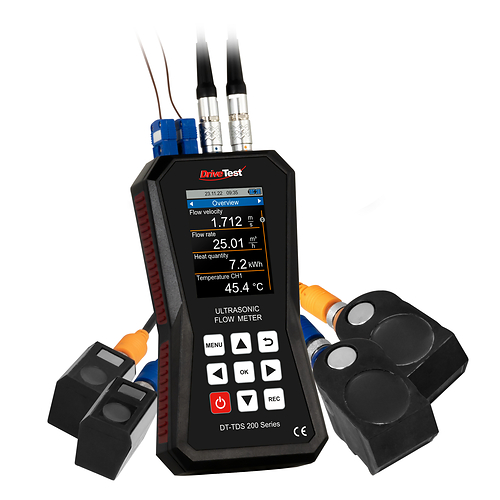
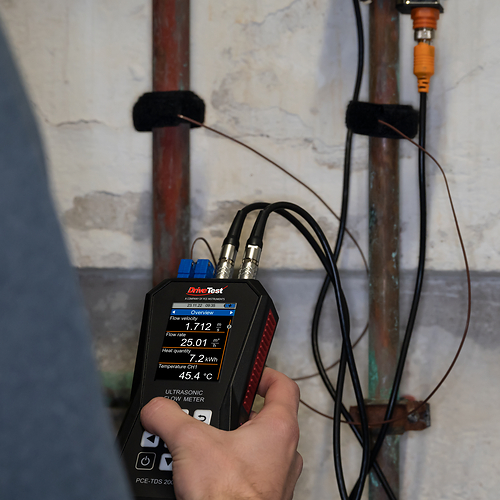
MESCHEDE, Germany, Oct. 24, 2026 /PRNewswire-PRWeb/ -- Accurate volumetric flow determination within industrial piping networks—across power generation, chemical process engineering, HVAC systems, and water management—remains a cornerstone of thermal efficiency, regulatory compliance, and dynamic process control. As a specialized developer and manufacturer of advanced measuring systems, Drive Test GmbH addresses these critical process requirements with its high-performance diagnostic instrumentation. Traditional inline flowmeters, such as magnetic inductive, turbine, or orifice plate devices, present inherent mechanical and operational constraints. Retrofitting or maintaining inline sensors typically necessitates pipe sectioning, system depressurization, and costly production interruptions. Furthermore, fluid-wetted components introduce potential leak paths, parasitic pressure drops, and susceptibility to chemical corrosion or mechanical erosion. To eliminate these operational vulnerabilities, process engineers increasingly implement clamp-on ultrasonic flowmeters. The DT-TDS 200 series from Drive Test GmbH offers a portable, high-precision, non-invasive diagnostic solution designed to capture fluid dynamics externally without compromising line integrity or interrupting continuous plant operations.
The DT-TDS 200 series operates on the transit-time ultrasonic difference principle. Dual piezoelectric transducers are externally mounted on the pipe geometry via precision alignment fixtures and acoustic coupling media. The system alternates transmitting and receiving high-frequency acoustic pulses through the moving fluid medium. Acoustic waves propagating downstream with the flow field exhibit reduced transit times relative to those traveling upstream against the flow vector. The high-speed signal processing unit within the DT-TDS 200 measures this nanosecond-level time differential with exceptional resolution. By incorporating user-defined pipe parameters—such as outer diameter, wall thickness, kinematic viscosity, and material speed of sound—the internal algorithm continuously computes the mean velocity profile, instantaneous volumetric flow rate, and totalized mass flow.
Because the non-invasive clamp-on sensors operate entirely outside the fluid boundary layer, the DT-TDS 200 series provides significant hydraulic and operational advantages over wetted sensor architectures. Eliminating internal flow obstructions prevents localized head loss, conserving pumping energy and maintaining stable hydraulic energy gradients. Media isolation ensures absolute process safety when monitoring hazardous chemicals, high-purity pharmaceutical fluids, or aggressive acids. Furthermore, eliminating physical exposure to abrasive slurries or corrosive media prevents sensor degradation, ensuring long-term measurement stability and minimal maintenance requirements.
Modern processing plants feature diverse metallurgy, polymer piping, and varied fluid media. The DT-TDS 200 series is engineered to accommodate these structural variations, featuring broad material compatibility across acoustic-conducting conduits including stainless steel, carbon steel, ductile iron, copper, PVC, and HDPE. Depending on the selected transducer setup, the DT-TDS 200 series covers nominal diameters ranging from compact lines at DN 15 (1/2") up to heavy industrial conduits exceeding DN 6000. It measures homogeneous liquids with low gas and particulate entrainment, reliably handling water, thermal fluids, hydraulic media, and organic solvents across operating temperatures from -30 °C to 160 °C.
To support plant auditing, preventive maintenance, and energy management protocols, the DT-TDS 200 series integrates an advanced multi-channel data logging architecture. Time-stamped diagnostic data and flow velocity profiles are stored internally and can be exported via high-speed USB interface to plant management software for statistical analysis and validation. When configured with paired RTD temperature sensors, the unit functions as a portable thermal energy meter. By concurrently calculating mass flow and thermal differentials across heat exchangers, the DT-TDS 200 quantifies instantaneous thermal duty and total energy consumption in hydronic cooling and heating loops—providing energy auditors with actionable operational insights.
Operating within a flow velocity spectrum of ±0.00 to ±30 m/s at a resolution of 0.0001 m/s, the DT-TDS 200 series delivers consistent accuracy across diverse fluid conditions. Powered by an integrated high-capacity lithium-ion battery array, the ruggedized handheld instrument supports extended field deployment in demanding environments.
The flow meter serves as a key diagnostic asset across core industrial sectors. Plant engineers utilize the system for field calibration of fixed instrumentation, pump performance characterization, and rapid troubleshooting without process interruption. In building automation and HVAC, it enables dynamic hydraulic balancing and heat recovery optimization. In chemical processing and water distribution, it facilitates continuous mass balancing, chemical dosing verification, and non-destructive leak identification across complex piping networks.
The DT-TDS 200 series from Drive Test GmbH provides industrial facilities with an advanced, mobile, and non-destructive diagnostic tool for fluid dynamic characterization. By avoiding physical pipe modification and operational downtime, it enhances asset reliability while lowering lifecycle maintenance costs across industrial plant infrastructure.
Further technical details on ultrasonic flow measurement are available here on our product page.
Media Contact
Ludger Droste, Drive Test GmbH, 49 2903 97699 8920, [email protected], https://www.drivetest.de/en/
SOURCE Drive Test GmbH

Share this article