
The global landscape of commerce is undergoing a profound transformation driven by the rapid rise of the influence economy — an ecosystem where digital creators and online audiences increasingly shape consumer demand and purchasing behavior. Rather than being a short-term marketing phenomenon, the influence economy represents a structural shift in how value is created and captured in modern markets.
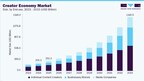
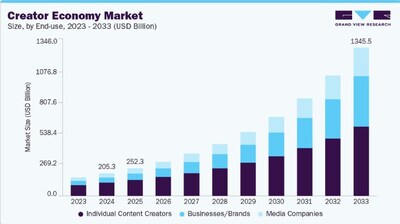
FUZHOU, China, March 6, 2026 /PRNewswire-PRWeb/ -- The economic scale of this shift is significant. In 2025, the global creator economy is estimated to be worth over $250 billion, and it is projected to expand to more than $1.3 trillion by 2033, growing at an annual rate of over 23%. These projections highlight how digital influence is evolving into a major commercial force that directly affects how products are conceived, marketed, and sold.
At the behavioral level, influence is increasingly tied to purchasing decisions. Research shows that more than half of consumers have purchased a product based on an influencer recommendation, demonstrating that digital influence now translates directly into measurable economic activity. As creators accelerate product discovery and trend formation online, demand emerges faster and becomes more fragmented, driven by niche interests and rapidly shifting digital attention.
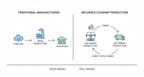
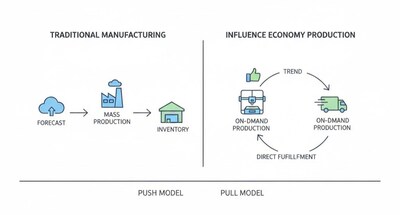
This new pattern of influence-driven demand exposes a structural limitation in traditional production systems. Conventional manufacturing was designed for predictability: large production runs, long forecasting cycles, and standardized product lines. By contrast, the influence economy operates at the speed of digital trends. Products inspired by online attention can surge in popularity within days and fade just as quickly. For businesses, this creates a persistent tension between opportunity and risk. High inventory commitments, slow production timelines, and limited flexibility make it difficult to respond effectively to fast-moving demand.
As a result, a growing gap has formed between how demand is generated and how products are produced. Creators and brands can spark interest almost instantly, yet traditional supply chains often require months to adapt. This mismatch discourages experimentation and limits the ability of businesses to monetize emerging trends. In an economy increasingly shaped by influence, production systems must become more agile to remain competitive.
Print-on-demand and on-demand manufacturing models are emerging as a practical response to this challenge. By enabling products to be manufactured only after an order is placed, these systems remove the need for speculative inventory and significantly reduce financial risk. Businesses can test new ideas in real time, respond quickly to digital trends, and offer a broader range of niche or personalized products without committing to large production volumes.
Within this evolving landscape, infrastructure platforms play a critical role in translating digital influence into physical products. PeaPrint illustrate how production infrastructure is evolving to support the operational needs of the influence economy, acting as a practical link between digital demand and product fulfillment.
PeaPrint reduces many of the practical barriers involved in launching customized products by streamlining design, production, and fulfillment into a single workflow. Integrated design tools and a no-inventory model allow creators and e-commerce sellers to transform ideas into market-ready products with minimal upfront investment. This accessibility enables smaller brands and independent creators to participate in commerce that was previously limited to companies with substantial capital and logistical resources.
Equally important is speed. In influence-driven markets, timing determines whether an idea succeeds or disappears. PeaPrint's streamlined workflow shortens the path from concept to fulfillment, enabling sellers to respond quickly to emerging trends and audience feedback. Rapid iteration becomes possible, allowing businesses to refine offerings based on real demand rather than speculative forecasts.
PeaPrint enables creators and businesses to translate audience demand into repeatable and scalable production processes. As successful products gain traction, sellers require systems that can expand without sacrificing flexibility. By integrating production, fulfillment, and digital tools into a unified workflow, PeaPrint supports sustainable growth while preserving the agility demanded by the influence economy.
The rise of the influence economy signals a broader evolution in how commerce functions. Markets are increasingly shaped by digital attention, rapid trend cycles, and direct creator-to-consumer pathways. In this environment, competitive advantage depends on aligning production capabilities with the tempo of influence.
As the influence economy continues to expand, platforms that connect creators with agile manufacturing will define the next phase of e-commerce growth. By synchronizing production with the realities of digital influence, PeaPrint are helping establish a new blueprint for how modern products are brought to market.
Media Contact
Jessica Zhang, PeaPrint, 1 5103777421, [email protected], PeaPrint
SOURCE PeaPrint



Share this article