
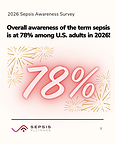
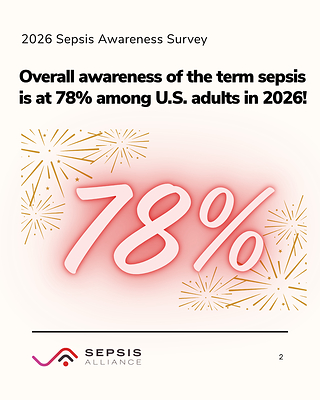
Awareness of the term "sepsis" among U.S. adults has reached an all-time high, with 78% of Americans reporting that they are familiar with the term, according to the 2026 Sepsis Alliance Awareness Survey. That is up from 75% in 2025 and a dramatic increase from just 19% when Sepsis Alliance first conducted the survey in 2003.
SAN DIEGO, Sept. 14, 2026 /PRNewswire-PRWeb/ -- Awareness of the term "sepsis" among U.S. adults has reached an all-time high, with 78% of Americans reporting that they are familiar with the term, according to the 2026 Sepsis Alliance Awareness Survey. That is up from 75% in 2025 and a dramatic increase from just 19% when Sepsis Alliance first conducted the survey in 2003.
But while more Americans know the word "sepsis," significant gaps remain when it comes to understanding what sepsis is and recognizing its signs and symptoms.
Sepsis is a life-threatening emergency that occurs when the body's response to an infection damages its own tissues and organs. More than 1.7 million people in the U.S. are diagnosed with sepsis each year, and sepsis contributes to approximately 350,000 adult deaths annually. The risk of mortality increases by 4 to 9% for every hour that treatment for sepsis is delayed, underscoring the critical importance of recognizing sepsis and seeking treatment quickly.
Sepsis Alliance, the nation's first and leading sepsis organization, has conducted its awareness survey since 2003 to measure public knowledge and understanding of sepsis and identify where additional education is needed. The organization works to create a more "sepsis safe" world by educating the public, healthcare professionals, policymakers, and advocates and advancing improvements in the diagnosis, treatment, and care of sepsis.
Awareness Is Rising, But Not Equally
The increase in overall awareness in 2026 is encouraging, but the survey continues to reveal significant differences across demographic groups.
Awareness of the term "sepsis" was significantly higher among white adults, with 85% reporting familiarity with the term, compared with 65% of Black adults and 66% of Hispanic adults. Income was also associated with awareness. Among adults with an annual household income of $80,000 or more, 84% reported being aware of the term sepsis, compared with 70% of those with an annual household income below $40,000.
Location also played a role. Adults living in suburban or town areas were more likely to report awareness of sepsis, at 82%, compared with 72% of adults living in urban areas.
"These continued differences in awareness are a large focus area for Sepsis Alliance and highlight the importance of prioritized outreach in underserved communities," said Thomas Heymann, Sepsis Alliance President and CEO. "We have put particular focus on creating accessible resources and targeted outreach for the communities that we know most need additional sepsis education, to save lives and limbs."
Knowing the Word Does Not Always Mean Knowing the Signs
While recognizing the word "sepsis" is an important first step, knowing the signs and symptoms and when to seek emergency care is even more critical.
The majority of people surveyed, 77%, were unable to identify all four of the most common signs and symptoms of sepsis. Sepsis Alliance uses the tool Sepsis: It's About TIME™ to help people remember these signs.
Of the four signs, infection was the most commonly recognized at 60%, followed by temperature at 52%, extremely ill at 51%, and mental decline at 30%.
Just 23% of respondents were able to identify all four signs and symptoms, while 30% selected "do not know," meaning more people selected "do not know" than were able to identify all four signs.
There were also significant racial differences in symptom recognition. Only 12% of Black respondents and 13% of Hispanic respondents were able to identify all four signs and symptoms, compared with 27% of white respondents.
The gap extends beyond symptom recognition. Fewer than half of respondents, 48%, were able to define sepsis correctly.
Together, these findings point to an important distinction. Awareness of sepsis is growing, but understanding of sepsis has not yet caught up.
Survey Respondents Report Personal Experiences with Sepsis
The survey also asked respondents about their own experiences with sepsis. Four percent reported that they had been diagnosed with sepsis during a hospital stay, while another 1% said they had been diagnosed with sepsis but were not informed until after they were discharged.
Fourteen percent of respondents said they had never been formally diagnosed with sepsis but believed they had experienced it at some point in their lives.
If the 4% of survey respondents who reported being diagnosed with sepsis during a hospital stay were hypothetically extrapolated to the U.S. adult population, the result would suggest that more than 10 million U.S. adults may have experienced a hospital diagnosis of sepsis. This survey-based extrapolation should not be interpreted as an estimate of the total number of Americans who have been diagnosed with sepsis, particularly because more than 1.7 million people are diagnosed with sepsis in the U.S. each year.
The findings do, however, highlight the prevalence of personal experiences with sepsis and the importance of continued public education about the condition.
Sepsis Is a Life-Threatening Emergency, But Many Americans Do Not Know It
As part of the 2026 survey process, Sepsis Alliance also surveyed a second group of U.S. adults about their understanding of life-threatening emergencies and sepsis's impact in hospitals.
When asked to identify the leading cause of death in hospitals, just 18% selected sepsis. More respondents selected "do not know," at 34%, or heart attack, at 24%.
Research has established sepsis as the leading cause of death in hospitals, yet the survey findings demonstrate that this fact remains largely unknown among the public.
When asked which conditions are life-threatening emergencies, 70% correctly identified sepsis, compared with 90% for heart attack and 83% for stroke.
The findings suggest that while many Americans recognize sepsis as a serious medical emergency, fewer understand the full scope and severity of the condition.
More Awareness, More Understanding, More Lives Saved
The continued rise in awareness of sepsis is an encouraging sign and a testament to the impact of decades of education and advocacy. But the 2026 survey also makes clear that awareness alone is not enough.
Sepsis Alliance remains committed to closing gaps in awareness and understanding, particularly among communities that have historically been underserved by sepsis education. That means expanding access to clear and accessible resources, advancing legislation that can save lives from sepsis, supporting research and innovation that improve care at the bedside, and championing the needs of sepsis survivors who may face lasting physical, cognitive, and emotional effects long after their initial illness.
Sepsis Alliance also continues to educate healthcare professionals through free CE- and CME-accredited learning opportunities, provide resources to help the public recognize and respond to sepsis, and connect people affected by sepsis with advocates and survivors for community, companionship, and inspiration. One key event is the Sepsis Alliance Summit, a free two-day virtual conference on September 16-17, 2026. Learn more at SepsisSummit.org.
The goal is simple. A world where more people recognize sepsis quickly, seek care sooner, and survive with less lasting harm.
Learn more about sepsis and Sepsis Alliance at sepsis.org.
Survey methodology: All figures, unless otherwise stated, are from YouGov Plc. Total sample sizes were 2,504 for survey 1 and 2,628 for survey 2, among U.S. adults ages 18 and older. Fieldwork was conducted June 22 through June 24, 2026, and June 24 through June 26, 2026, respectively.
Media Contact
Alexandria Colvin, Sepsis Alliance, 1 6192320300, [email protected], http://sepsis.org
SOURCE Sepsis Alliance

Share this article