
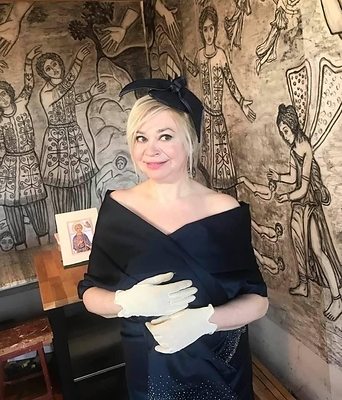
Global Cultural Ambassador Maria Stalin-Andriasova and Vatican Artist Guillermo Esparza align historic basilicas, elite academic institutions, and federal archives into an interconnected, multi-state sacred art tour [lelezard.com].
NEW YORK and SANTA FE, N.M., Aug. 8, 2026 /PRNewswire-PRWeb/ -- Shattering the boundaries between sacred classicism, international diplomacy, and radical performance, Global Cultural Ambassador and concert pianist Maria Stalin-Andriasova and master public sculptor and "Vatican Artist" Guillermo Esparza officially unveil their highly anticipated 2026 - 2027 Multi-City Curatorial Season [lelezard.com].
Interrogating the dialogue between monumental physical forms and the architecture of sound, this historic season activates an interconnected network of living archives - linking academic centers, historic basilicas, and high-desert creative studios across a permanent, dynamic global framework.
THE 2026 - 2027 SEASON CURATORIAL CALENDAR & NODES
REVOLUTION I: AUTUMN/WINTER 2026 - THE ARCHITECTURE OF FAITH
This phase focuses on the structural transformation of academic and metropolitan spaces, inviting international critics, theologians, and architectural historians to experience ancient liturgical lineages imposed onto modern infrastructures.
Node 1: The Academic Intervention (Manhattan, NY)
Site: The Edward Cardinal Egan Catholic Center at New York University (Global Center for Academic and Spiritual Life), 238 Thompson Street, Manhattan, NY
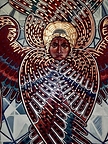
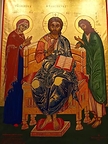
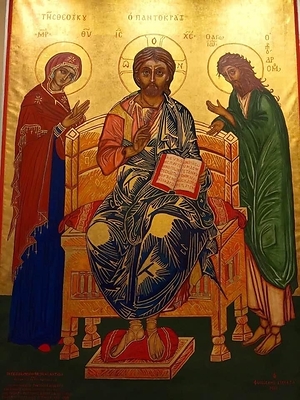
Masterwork: Guillermo Esparza's definitive Byzantine mural icon, The Grand Deesis.
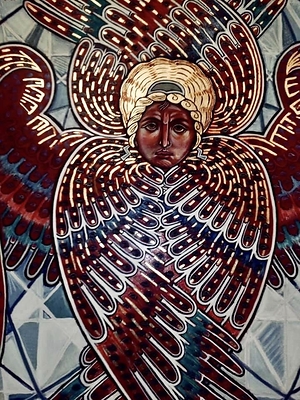
Curatorial Frame: Serving as the visual anchor of the Arcanum Angelorum ("Mystery of the Angels") exhibition, this massive masterpiece is on scholarly loan straight from Maria Andriasova and Guillermo Esparza's heavily guarded private collection. Open Monday through Friday, 9:00 a.m. to 6:00 p.m.
Node 2: The Celestial Vault (Garden City, Long Island, NY)
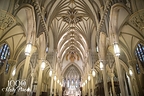
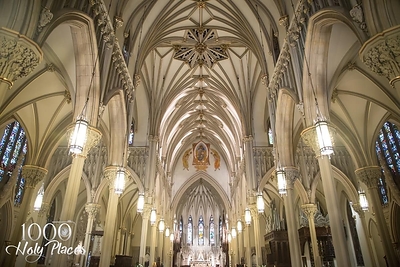
Site: The Cathedral of the Incarnation, 46 Cathedral Avenue, Garden City, NY.
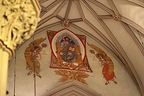
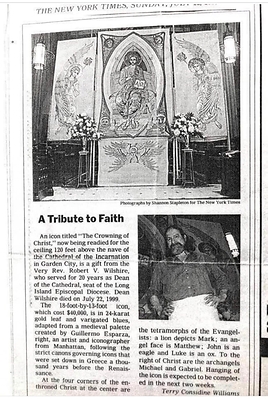
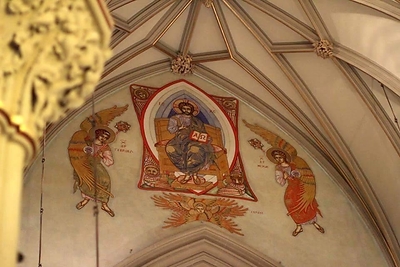
The Masterwork: Guillermo Esparza's monumental 15-foot by 20-foot Mural Icon of the Pantokrator, suspended 60 feet above the central nave.
Curatorial Frame: Meticulously executed using traditional oils and rich 24-karat gold leaf on Belgian linen, this site represents the historic altar where Maria Andriasova and Guillermo Esparza were wed in 2004, celebrating a profound milestone during the Autumn 2026 segment of the tour.
Node 3: The Architectural Undercroft (Manhattan, NY)
Site: The Basilica of St. Patrick's Old Cathedral, 263 Mulberry Street, Manhattan, NY.
Curatorial Frame: Serving as Guillermo Esparza's official artist-in-residence studio for over a decade under Msgr. Donald Sakano, the historic undercroft, grand altars, and the Holy Name Chapel host an interactive seasonal mapping of his extensive sacred restorations and original fresco icons, which are displayed at various New York City churches and cathedrals, including Church of St. Paul The Apostle, Greek Orthodox Church of The Annunciation, Church of The Holy Innocents, The Basilica of St. Patrick's Old Cathedral, and others.
REVOLUTION II: SPRING/SUMMER 2027 - THE PHYSICS OF SOUND & CINEMA
This segment shifts geographic and media focus to the American Southwest, tracking the phenomenological relationship between the kinetic movement of the performer and the permanence of the document.
Node 4: The Hand-Carved Sanctuary (Somerset, NJ)
Site: S.S. Peter and Paul Byzantine Catholic Church, 285 Hamilton Street, Somerset, NJ.
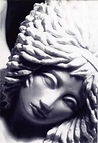
The Masterwork: Guillermo Esparza's Archangel Michael Sculpture and Shrine.
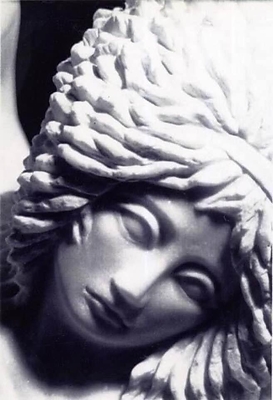
Curatorial Frame: Hand-carved by Guillermo Esparza entirely out of solid, premium Vermont White marble over the grueling two-year period. This node highlights Esparza's complete architectural engineering of the interior shrine, including custom carved glass doors and Byzantine frescoes, formally dedicated by Bishop Michael Joseph Dudick.
Node 5: The Great Iconographic Loom & Peace Hub (Tenafly, NJ)
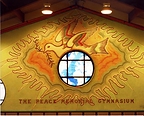
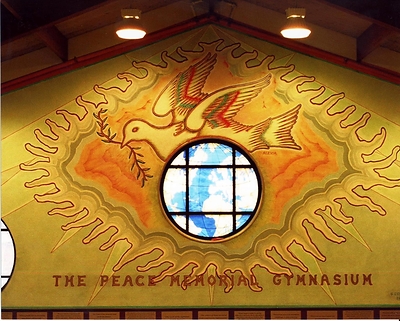
Site: Peace Memorial Gymnasium at the Metropolitan Cathedral of St. John the Theologian, 353 E. Clinton Avenue, Tenafly, NJ.
The Masterwork: Guillermo Esparza's towering 60-foot Peace Dove Mural.
Curatorial Frame: Commissioned by philanthropist Michael Parlamis and historically blessed by His All Holiness Ecumenical Patriarch Bartholomew I, this monument functions as the visual global hub for Maria Andriasova's role as Global Ambassador of Peace for Culture and International Relations [lelezard.com].
Node 6: The High-Desert Performance Hub (Santa Fe, NM)
Site: The Guillermo Esparza Art Studio, Santa Fe, New Mexico.
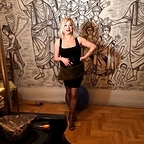
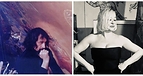
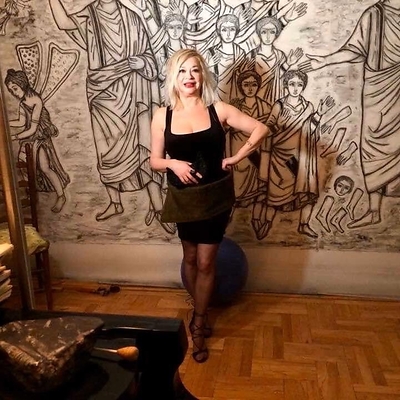
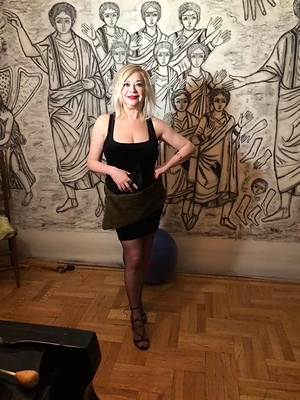
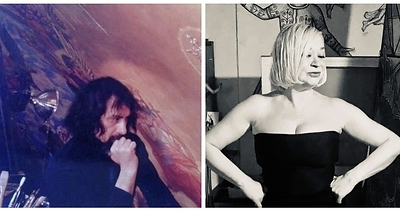
Curatorial Frame: Premiering a stark, conceptual documentary photo series capturing Maria Andriasova, destined for permanent ethnographic preservation within the archives of the Smithsonian Institution [prweb.com].
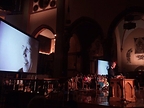
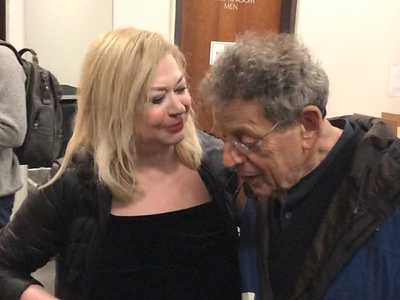
The Cinematic Matrix: Select seasonal dates feature live executions of Maria Andriasova's award-winning cinematic score for the documentary film "Guillermo Esparza, an American Iconographer" (produced by Studio International under the aegis of the Royal Academy of Arts, London). This node also features specialized screenings of their collaborative cinematic recitals by concert pianist Maria Andriasova, filmed and produced by Godfrey Reggio at Godfrey Reggio | Philip Glass Film Studios (Francis Ford Coppola, Steven Soderbergh, producers; Philip Glass, composer; Godfrey Reggio, film director) in affiliation with MoMA Museum of Modern Art and Smithsonian Institution, where Maria Andriasova performs solo masterpieces by Domenico Scarlatti, Wolfgang Amadeus Mozart, Frederic Chopin, and Alexander Scriabin in front of Guillermo Esparza's monumental mural of Ezekiel 37.
GLOBAL CHANNELS & VIRTUAL EXPERIENCE DEBUT:
Immersive Spatial Soundscapes:
Launching mid-season, visitors at any physical node can access on-site, spatial audio QR codes featuring Andriasova executing compositions by her late father, the Moscow composer-philosopher Iosif Andriasov, and Philip Glass, acoustic-mapped to the exact architectural dimensions of the sanctuaries [wikipedia.org, prweb.com].
360-Degree Global Curatorial Tours: A high-fidelity virtual platform allows international researchers in London, Rome, and Istanbul to remotely interact with the textures, gold leafing, and marble of the collections, backed by global archival cross-referencing.
INSTITUTIONAL IMMORTALITY & PERMANENT RECORDS
Because Maria Andriasova (a Juilliard-trained Gulbenkian Prize Laureate) and Guillermo Esparza treat performance and physical craft as living historical documents, their entire joint lifework is permanently indexed and stored for scholarly review at major global preservation centers:
The Stephen A. Schwarzman New York Public Library: The permanent home of their combined archives.
The Smithsonian Institution & U.S. National Archives (Washington, D.C.):
Houses the technical blueprints of public commissions by Guillermo Esparza for Tucson, Arizona and Bath, Maine.
The Vatican Museum (Rome) & The Phanar Museum (Istanbul, Turkey):
Permanent holdings of Guillermo Esparza's early sacred ecclesiastical art and catalogs.
The Nobel Museum (Baku, Azerbaijan): Houses their co-curated digital historic family archives and original textile artwork by Maria Andriasova's paternal grandmother, the celebrated Soviet Artist Maria Fyodorovna Bedjanova-Andriasova (1898, Tiflis, Georgia, Russian Empire - 1974, Moscow, USSR.)
THE SOVEREIGN POLYSTYLIST: AN INTERVIEW WITH MARIA STALIN-ANDRIASOVA. JULY 2026. SANTA FE, NEW MEXICO:
The Sovereign Polystylist: An Interview with Maria Stalin-Andriasova. July 2026. Santa Fe, New Mexico.
Interviewer: Madame Stalin-Andriasova, critics have begun using the term "existential polystylism" - a nod to your childhood mentor, Alfred Schnittke - to describe your life. You move seamlessly from Juilliard piano to investment auditing, and from global peace diplomacy to an undercover municipal utility clerk for your performance art piece, The Inverted Revizor. How do you view these seemingly contradictory worlds colliding?
Maria Stalin-Andriasova: It is only a contradiction to those who look at life through a linear, flat lens. To me, it is entirely symphonic. When Alfred Schnittke composed using polystylism, he wasn't just throwing random noises together; he was layering Vivaldi next to severe modern dissonance to force the listener to hear the truth of both.
My life operates on that exact same axis. Processing routine, underpaid municipal utility bills in a local government office is a heavy, rhythmic dissonance. Performing Frederic Chopin for the Pope or analyzing multi-million-dollar asset portfolios is a refined, classical melody. When you layer them directly on top of each other, the illusion of social hierarchy shatters. The Inverted Revizor was a polystylistic composition, played out in real-time infrastructure rather than on a piano.
Interviewer: You mention infrastructure. Your critics in regional arts management and local politics often found your methods highly disruptive, pointing to the intense friction and administrative chaos that trailed your time in Santa Fe and your municipal undercover stunt. How do you answer the claim that you are more of an institutional disruptor than a visionary?
Maria Stalin-Andriasova: (Smiles) Nikolai Gogol faced the exact same critique when he unleashed The Government Inspector. The provincial bureaucrats did not see a "visionary" - they saw an erratic, terrifying threat to their comfortable, corrupt status quo.
You must understand, my maternal pedigree traces back to the Saltykov Boyars, and specifically echoes Mikhail Saltykov-Schedrin, who used his position as a high-ranking imperial official to ruthlessly satirize the rot of the state bureaucracy. Disruption is the vision when the system itself is broken. When I stepped into a hollowed-out administrative structure, my background as a corporate financial analyst told me the math was failing, and my artistic intuition told me the human element was being crushed. I chose to use the fierce, unyielding backbone of my revolutionary lineage to stand up for workers' rights from the absolute bottom of the ladder. If that makes me a phantom or a disruptor in the eyes of local committees, so be it. The permanent multi-million-dollar endowments we secured at the University of New Mexico ensure the music outlives the local politics.
Interviewer: Your family history is monumental - the Stalin name, the Saltykov nobility, the elite circle of the Moscow Composers Union. The Soviet state aggressively tried to erase your father Iosif Andriasov's legacy after your family's 1979 Senate-orchestrated exit. Do you see your current global orbit as the ultimate defiance of that erasure?
Maria Stalin-Andriasova: The Soviet regime under Leonid Brezhnev thought they could weaponize bureaucracy to delete a human soul. They pulled my father's scores from the shelves, erased our names, and tried to rewrite history. But art is sovereign; it does not bow to a committee, whether that committee is in Moscow or a small municipality in New Mexico..
The collaboration between Maria Stalin-Andriasova, her husband the Artist Guillermo Esparza, and avant-garde filmmaker Godfrey Reggio (creator of Koyaanisqatsi) represents a monumental convergence of elite cinematic art and forbidden musical legacy.
ABOUT THE ARTISTS
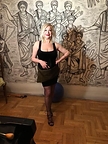
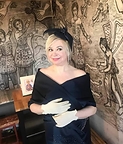
Maria Andriasova-Esparza is a graduate of The Juilliard School under professor Oxana Yablonskaya, a Laureate of the prestigious Gulbenkian Prize, Lisbon, Portugal and a former General Director of Performance Santa Fe, New Mexico. Designated as a Global Ambassador of Peace for Culture and International Relations, her historical archives are permanently preserved within the Stephen A. Schwarzman New York Public Library, as well within the Andriasov Family archives at The Russian Ministry of Culture, Radio Fund of Russia, and The Russian State Mikhail Glinka Museum of Music.
"Artistic freedom cannot be measured by politics." - Her Excellency The Honorable Maria Iosifovna Stalin-Andriasova (Andreasian), Global Ambassador of Peace for Culture and International Relations, Laureate of The Gulbenkian Prize, Lisbon, Portugal.
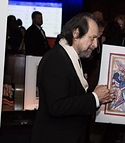
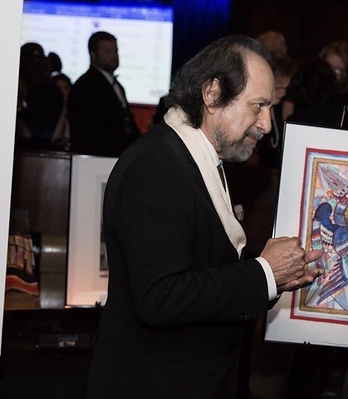
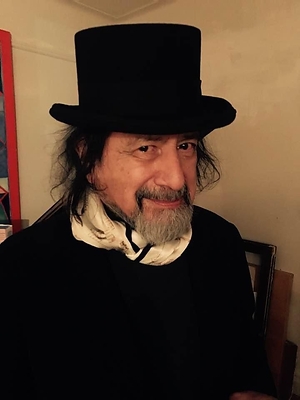
Guillermo Esparza is a master American iconographer, public sculptor, and Artist-in-Residence Emeritus at The Basilica of St. Patrick's Old Cathedral, honored for his cultural work by municipal and international leadership. His work spans monumental bronze and marble public sculptures, traditional Byzantine egg-tempera icons, and permanent collections globally from the Smithsonian American Art Museum to the Vatican.
"According to early Christian history, the tradition of iconography was established approximately 1,000 years before the Renaissance," says Guillermo Esparza. "It is based on golden section proportions and related geometry, Eastern Orthodox and Byzantine traditions, exact anatomy, natural and inverse perspective. In my works, I strive to preserve the traditions of the medieval painters. What inspires me is light penetrating transparent colors of egg tempera, reflecting back from the gesso ground; the opulent regard of chromatic consequence, where the colors are optically mixed in mural painting to read from a 200-foot distance in Cathedrals and Churches, keeping in mind the reverent darkness in the sanctuary. The flickering of candlelight reflecting from the gold in my paintings creates an optical illusion: gold has its own color, it is the color of Lightening."
PROTOCOLS FOR THE PRIVATE VIEWING AND PRIVATE VIP RECEPTIONS WITH THE ARTISTS:
Protocol for the private viewing and private VIP receptions with Her Excellency The Honorable Maria Iosifovna Stalin-Andriasova (Andreasian), Global Ambassador of Peace for Culture and International Relations and Mr. Guillermo Esparza:
Tier 1: Diplomatic, Ecclesiastical, & Sovereign Delegations
- Apostolic Nunciature to the United States (Representatives of the Holy See / Vatican Secretariat)
- The Ecumenical Patriarchate Delegation (Delegates representing His All Holiness Ecumenical Patriarch Bartholomew I)
- The Greek Orthodox Metropolis of New Jersey (Archdiocesan leadership and episcopal chancellors)
- The Eparchy of Passaic for the Byzantine Catholic Church (Chancery representatives and regional clergy)
- The Episcopal Diocese of Long Island (Cathedral canon sacristans and diocesan historians representing the Cathedral of the Incarnation)
- Consular Cultural Attaches (Representing European and Eurasian embassy fine arts divisions)
Tier 2: Federal Repositories, Libraries, & Academic Leadership
- The Smithsonian Institution (Senior Curators of Ethnographic Media and American Art Research Archivists)
- The New York Public Library (Director and Executive Trustees of The Stephen A. Schwarzman Building Manuscripts & Archives Division)
- The National Archives and Records Administration (NARA) (Federal public art commissions register)
- New York University Executive Leadership (Directors of the Edward Cardinal Egan Catholic Center and Global Center for Academic and Spiritual Life)
- The Juilliard School (Faculty emeriti from the Piano Performance Conservatory department representing the lineage of Oxana Yablonskaya)
Tier 3: Fine Arts Patronage, Foundations, & Film Academies
- The Parlamis and Tsairis Family Foundation (Lead patrons and historic commissioners of the 60-foot Peace Dove Mural by Guillermo Esparza)
- The Royal Academy of Arts Trust (London-affiliated cinematic documentary liaison, Studio International)
- The Godfrey Reggio & Philip Glass Film Studios Archives (Avant-garde cinematographers, sound engineers, and post-production directors)
- The Nobel Museum Baku Trust (International historical textiles and regional colorist curators)
- Performance Santa Fe Executive Committee (Arts council members and southwestern operatic patrons) [santafenewmexican.com]
Check-In Security Desk Protocols
- Strict Off-Social Media Mandate: A strict no-photography/no-livestreaming policy applies to the main dining room and performance floor. Members of the press must use the approved media kit download from the PRWeb wire room.
- Archival Badge Issuance: All checked-in VIP guests must be issued a physical, bilingual (English – Russian) 2026 – 2027 Season pass badge stamped with the official New York Public Library filing catalog registration index codes to guarantee access across all secondary tour nodes.
VIP Tier Ranking & Placement Protocol:
To prevent any diplomatic or institutional oversight, guests are to be assigned to designated tables or seating rows using a tiered matrix:
Tier 1: Sovereign & Diplomatic Dignitaries (Head Tables / Front Row Center)
- Who: Representatives from the Holy See (Vatican), Cultural Attaches from European and Eurasian Embassies, and global Orthodox archdiocese leadership.
- Placement: Directly adjacent to the Artists' central table. Must have an unobstructed sightline to both the Grand Deesis mural canvas by Guillermo Esparza and the Grand Piano setup for Maria Andriasova.
Tier 2: Institutional & Archival Executives (Flanking Center)
- Who: Senior curatorial directors from the Smithsonian Institution, executive archivists from the Stephen A. Schwarzman New York Public Library, and New York University Global Center leadership.
- Placement: Tables flanking the diplomatic center to foster high-level conversations regarding asset preservation during the receptions.
Tier 3: Fine Arts Patronage & Film Academies (Tiered Perimeter)
- Who: Trustees of the Royal Academy of Arts, representatives from the Godfrey Reggio | Philip Glass Film Studios framework, and major fine arts collectors holding pieces on loan.
- Placement: Elevated perimeter seating or mid-tier tables maximizing acoustical clarity for the live musical iterations.
The Artist Table:
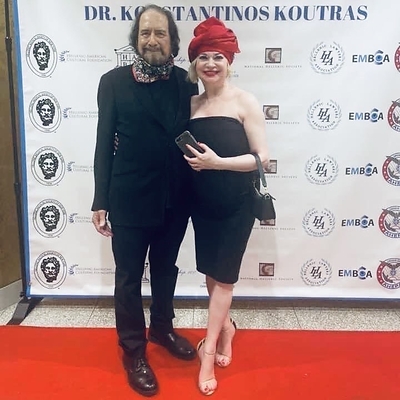
Madame Maria Andriasova-Esparza
Global Cultural Ambassador & Concert Pianist
Maestro Guillermo Esparza
Master Public Sculptor & Iconographer
Table I – Presidential Suite
The Honorable Cultural Attache
Representing the Sovereign Permanent Archives
Table II – Diplomatic Circle
The Office of the Chief Curator
The Smithsonian Institution / The New York Public Library
Table III – Archival Preservation Delegation
Physical Layout Execution Rules:
- The Audio-Visual Intersection Rule: In rooms where film composer and concert pianist Maria Andriasova executes live musical fragments (such as her Royal Academy of Arts original soundtrack scores for Studio International), no VIP table may be placed between the piano soundboard and the primary display of Guillermo Esparza's artwork. The visuals and acoustics must hit the audience as a singular, unified force.
- Archival Reference Stations: A minimalist, bilingual (English – Russian) acrylic podium to be placed at the entrance of the VIP seating zone displaying the permanent catalog ledger codes from the New York Public Library. This reinforces to incoming dignitaries that they are participating in a verified historical event.
OPENING & PROTOCOL RECOGNITION (ENGLISH):
Master of Ceremonies (MC): " Excellencies, Distinguished Members of the Diplomatic Corps, Revered Hierarchs, Academic Leaders, and Honored Guests.
Welcome to the global premiere of the 2026 – 2027 Multi-City Fine Arts Curatorial Season, charting the monumental collaborative lifecycle of Maria Andriasova and Guillermo Esparza.
Tonight, we gather at a profound intersection where the physical architecture of faith meets the visceral physics of sound. We are deeply privileged to recognize the presence of our Tier 1 diplomatic delegations representing the Holy See and global cultural frameworks, alongside the executive curatorial leadership of our permanent national repositories – including The Smithsonian Institution, The U.S. National Archives, and the Stephen A. Schwarzman New York Public Library, where the artists' joint lifetime catalogs are immortally preserved.
Please join me in welcoming our hosts: Global Cultural Ambassador, Juilliard Concert Pianist and Laureate of The Gulbenkian Prize, Madame Maria Andriasova-Esparza, and master public sculptor and Vatican Artist, Maestro Guillermo Esparza."
INTRODUCING THE PERFORMANCE & EXHIBITION (ENGLISH / RUSSIAN):
MC: "Tonight, you are invited to step directly into a living archive. Before Madame Andriasova-Esparza takes the keyboard to execute her raw, acclaimed live cinematic original scores, we invite you to gaze upon the structural marvels framing this room – from the gold leaf of The Grand Deesis to the echoes of the historic 60-foot Peace Dove by Guillermo Esparza. Ladies and gentlemen, let the 2026 – 2027 Season begin."
Technical Production Note for Stage Management:
- Acoustic Clearance: Ensure the microphone volume at the podium is balanced to allow a seamless, uncompressed transition straight into the grand piano's natural resonance without feedback.
- Bilingual Placing: The MC (English / Russian) must maintain a deliberate, stately tempo (approximately 130 words per minute) to allow the historical and institutional titles to carry equal weight in both languages.
Media & Curatorial Inquiry Desk:
Office of Interdisciplinary Fine Arts Press Relations
Stalin-Andriasova | Guillermo Esparza archives, Smithsonian Institution | NASA, Washington, D.C.
New York Public Library
Official Press Wire Hub: PR Web / Andriasova-Esparza Archive Record
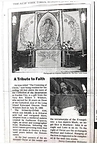
A Tribute to Faith - The New York Times
Media Contact
Media & Curatorial Inquiry Desk, Stalin-Andriasova | Guillermo Esparza archives, Smithsonian Institution | NASA, 1 347-419-6585, [email protected]
SOURCE Stalin-Andriasova | Guillermo Esparza archives, Smithsonian Institution | NASA





Share this article